Project Overview
The Anti-Harassment Course was designed to foster a safe, equitable, and professional work environment at Amartha. The core challenge was translating dense corporate policy (SK Direksi Nomor 02702 Tahun 2025) and national law into an engaging, actionable learning experience — ensuring it wasn't just a "check-the-box" compliance exercise, but a program that genuinely empowers employees to act.
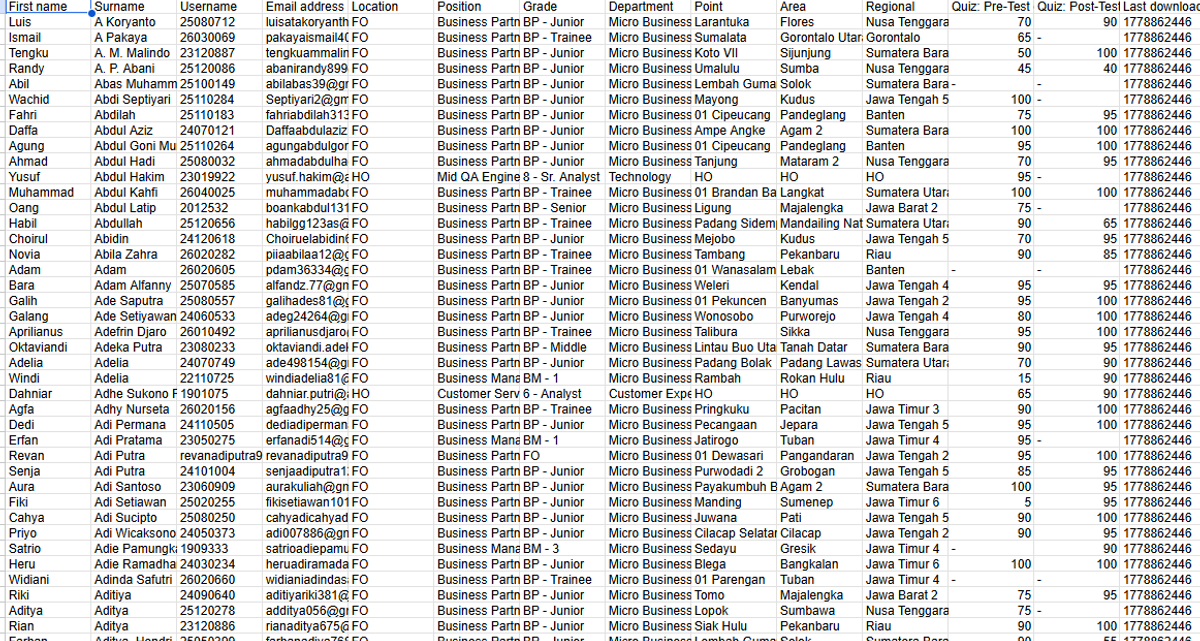
The course reached 1,980 participants, with 1,496 achieving full course completion. Assessment results showed strong knowledge acquisition — average scores improved from 85.14 (pre-test) to 96.21 (post-test), yielding an N-Gain of 64.58% (Medium Gain category), notably high given participants already entered with above-average baseline knowledge.
1. Strategic Objectives
The primary goal was to ensure every A-Team member understands their role in maintaining a workplace free from discrimination, bullying, and harassment. The course aimed to:
- Define and Identify: Clearly define harassment across physical, visual, and verbal categories, including digital misconduct.
- Empower Action: Equip employees with the knowledge and confidence to actively prevent and safely report incidents.
- Align with Values: Link workplace safety directly to organizational health, productivity, and Amartha's core values.
2. Instructional Design & Content Strategy
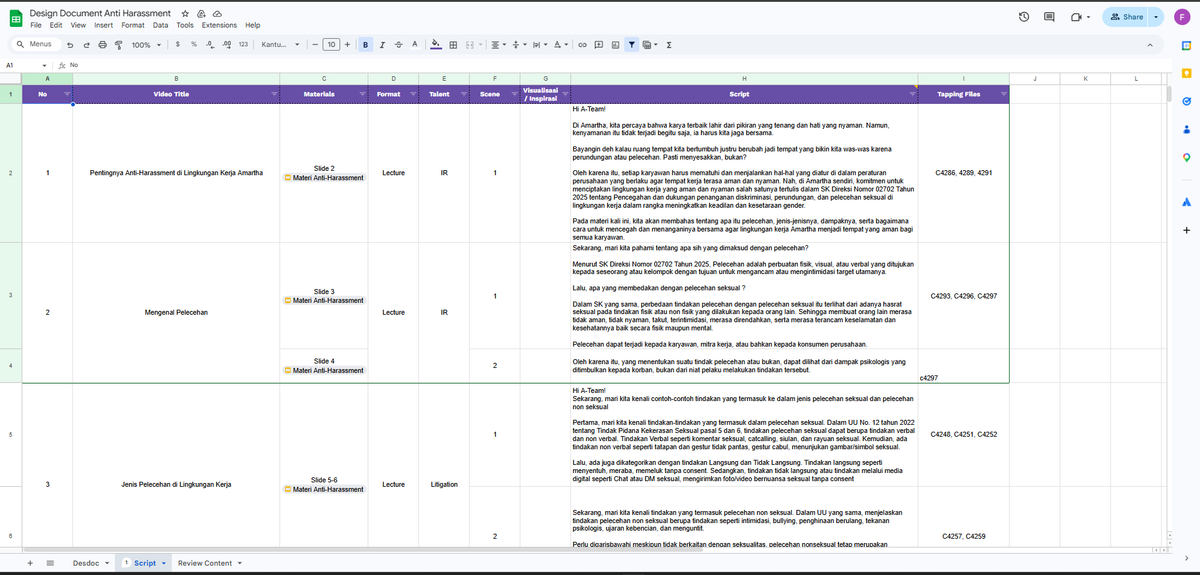
The instructional design prioritized real-world application over legal jargon:
- Impact Over Intent: A critical curriculum shift — teaching that harassment is determined by the psychological impact on the victim, not the intent of the perpetrator, effectively clarifying "gray areas" for learners.
- Relatable Scenarios: Addressed realistic workplace dynamics including power relations, explicit consent, catcalling, and unsolicited digital messages.
- Authoritative Delivery: Featured internal Litigation experts in video lectures to provide organizational authority, while maintaining an approachable tone throughout the scripting.
- Rigorous Quality Assurance: Implemented a multi-stage SME review cycle to ensure absolute legal accuracy and instructional effectiveness.